Bean Embryo / Imprint
Bean Embryo / Imprint
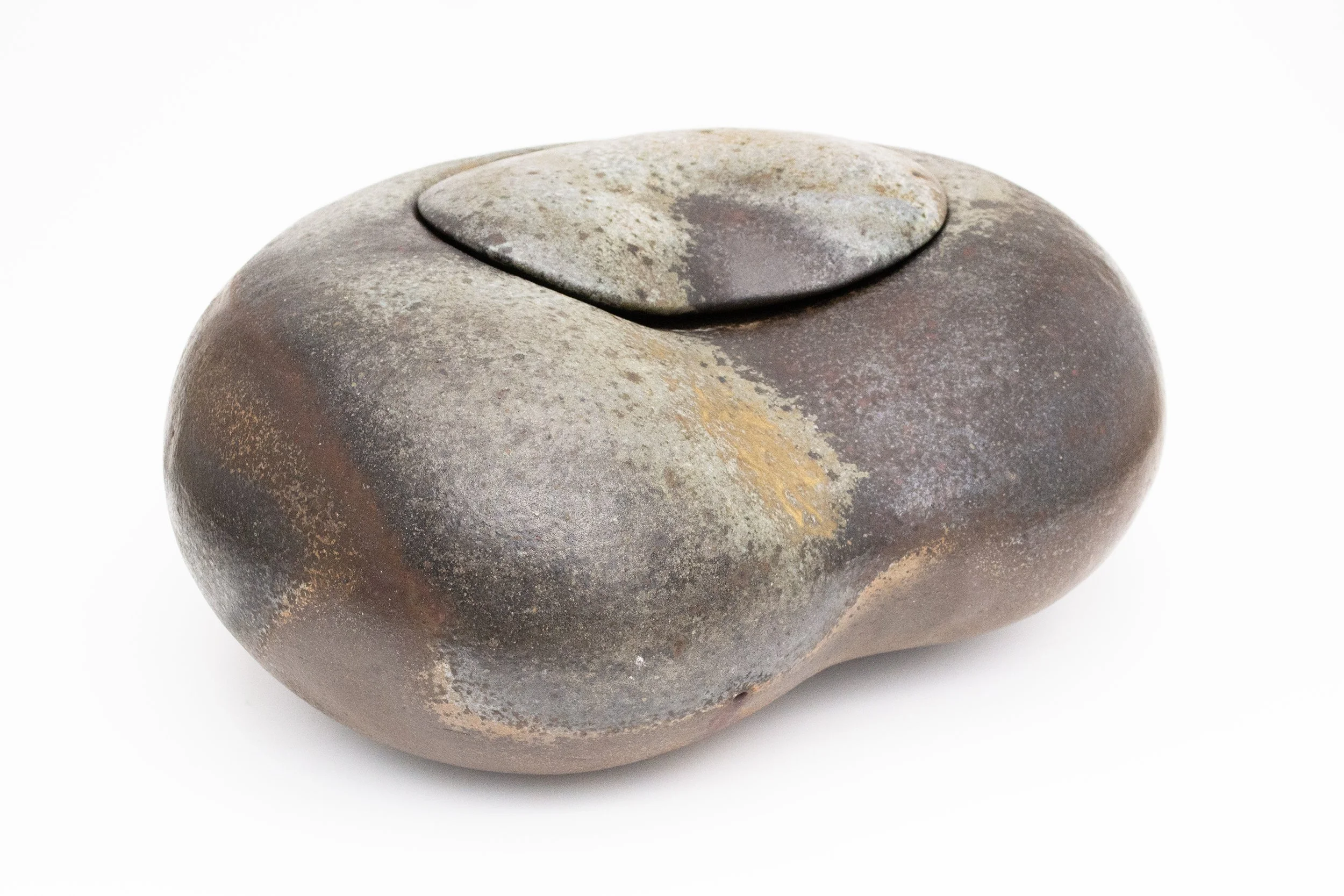
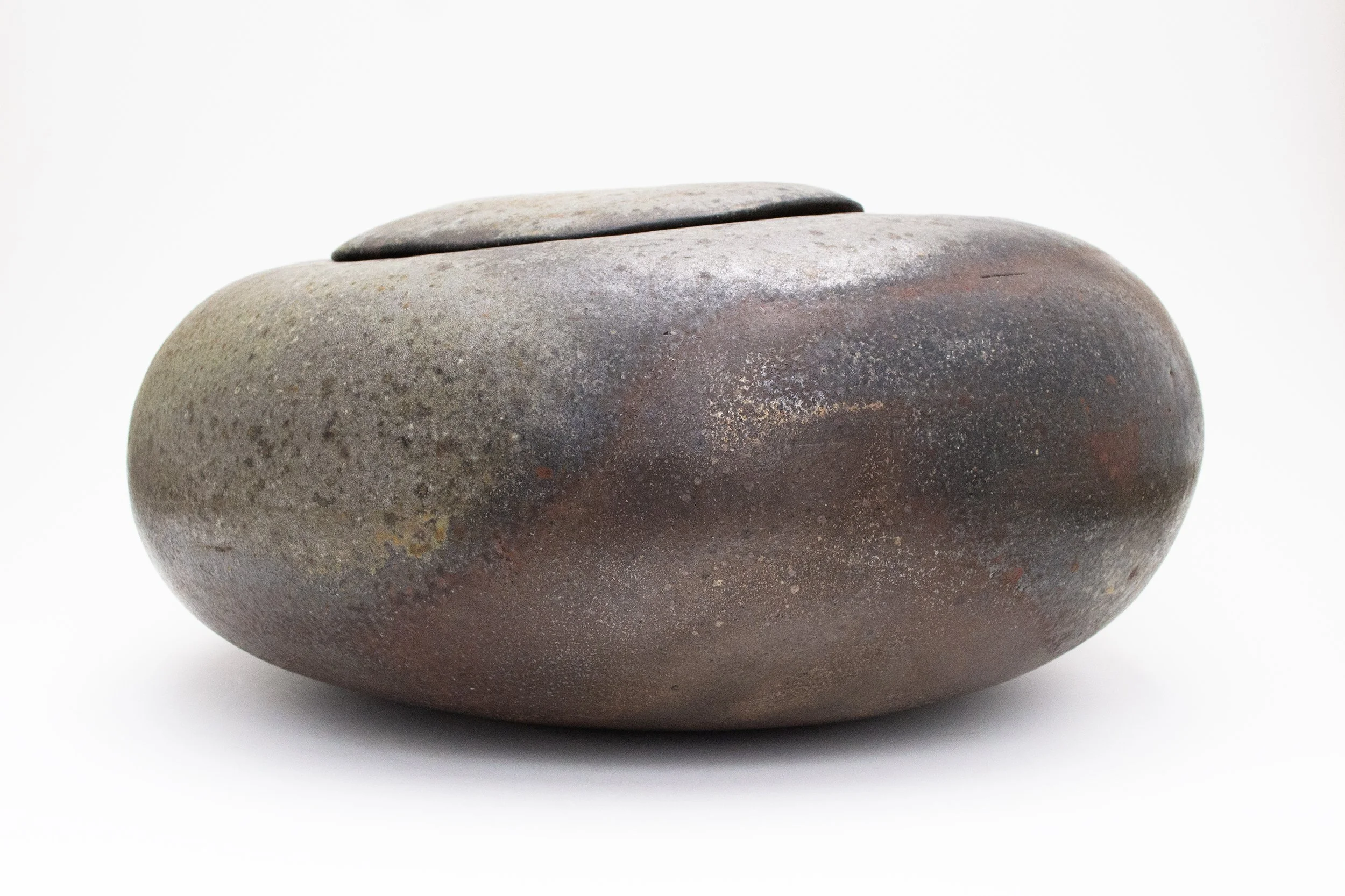
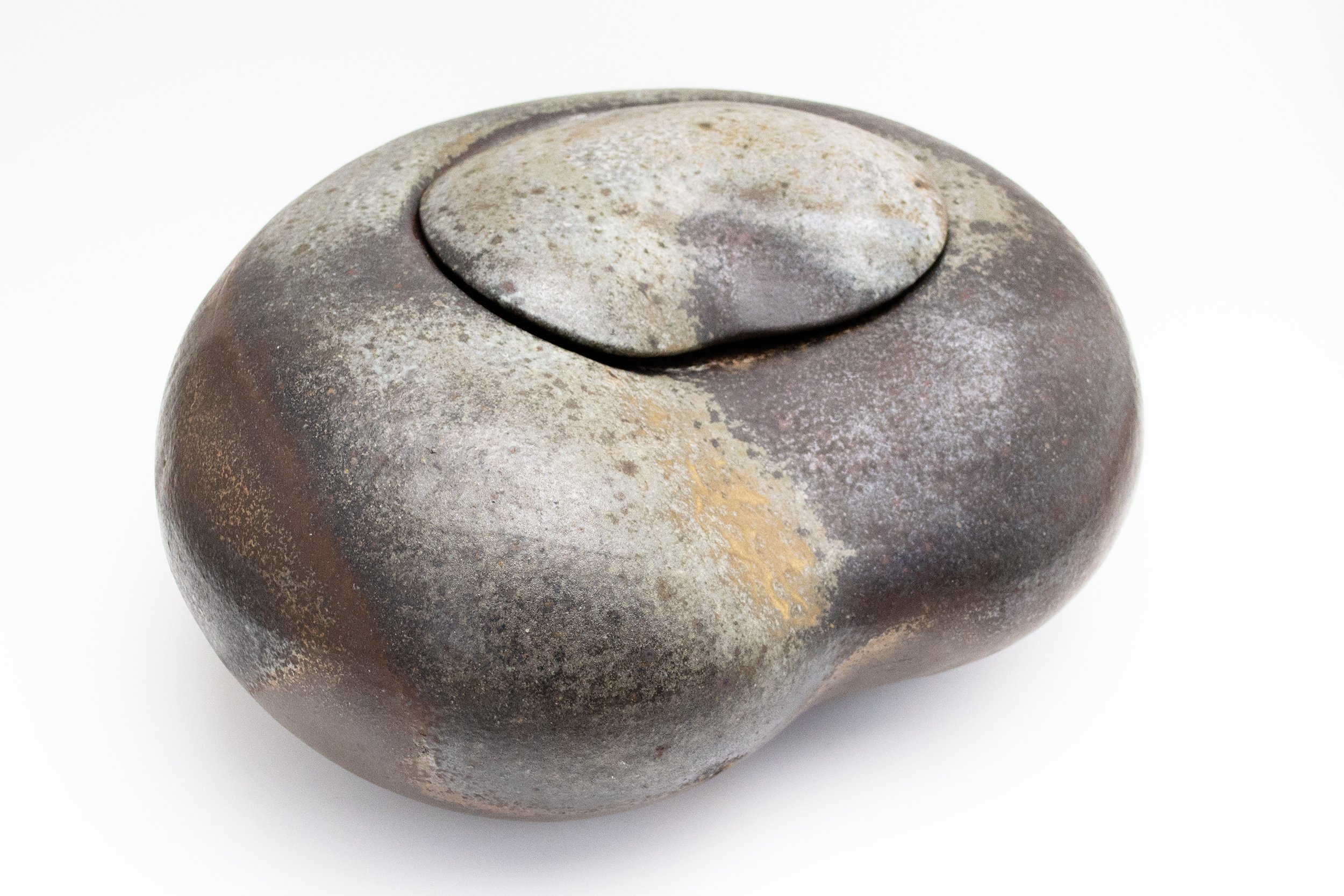
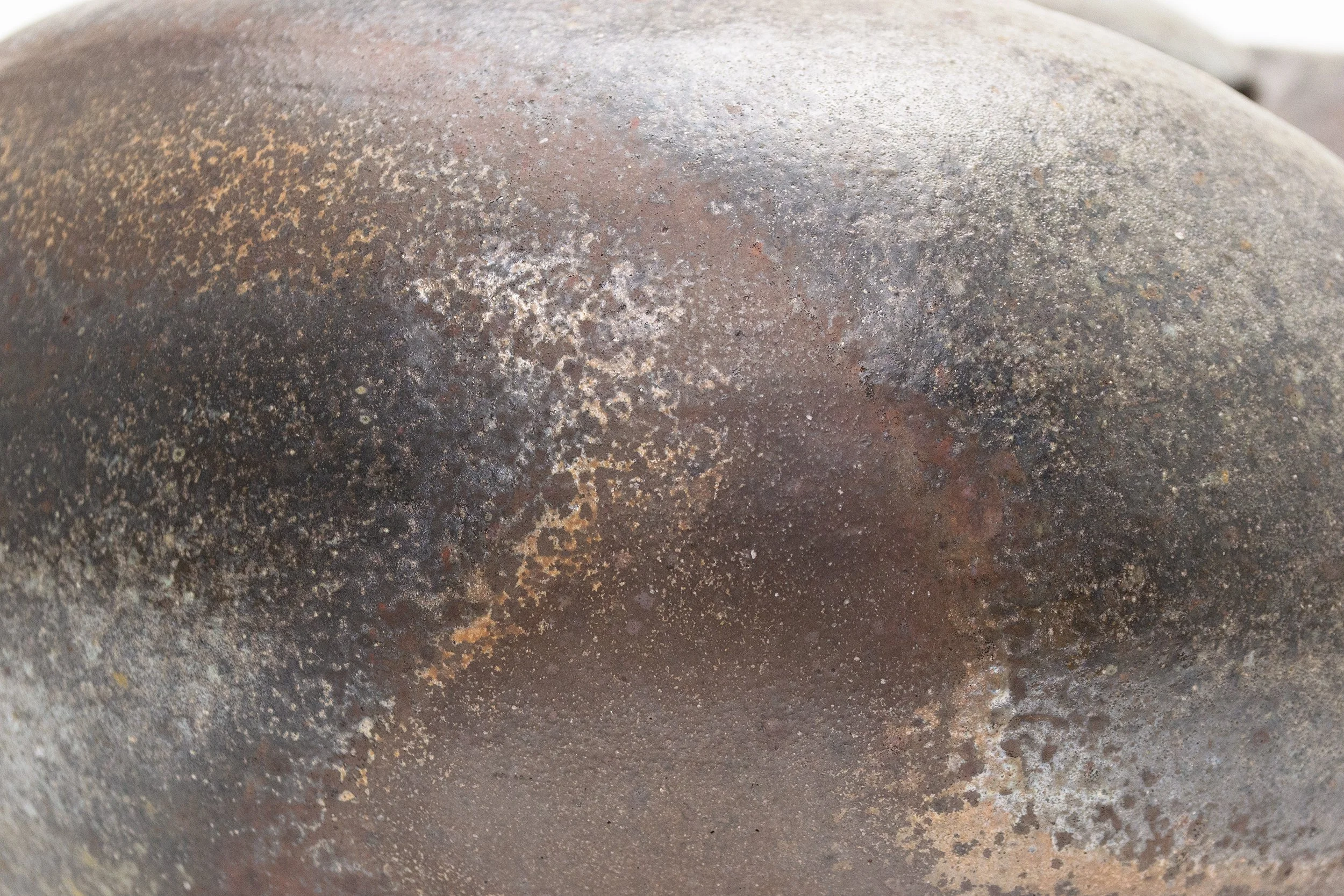
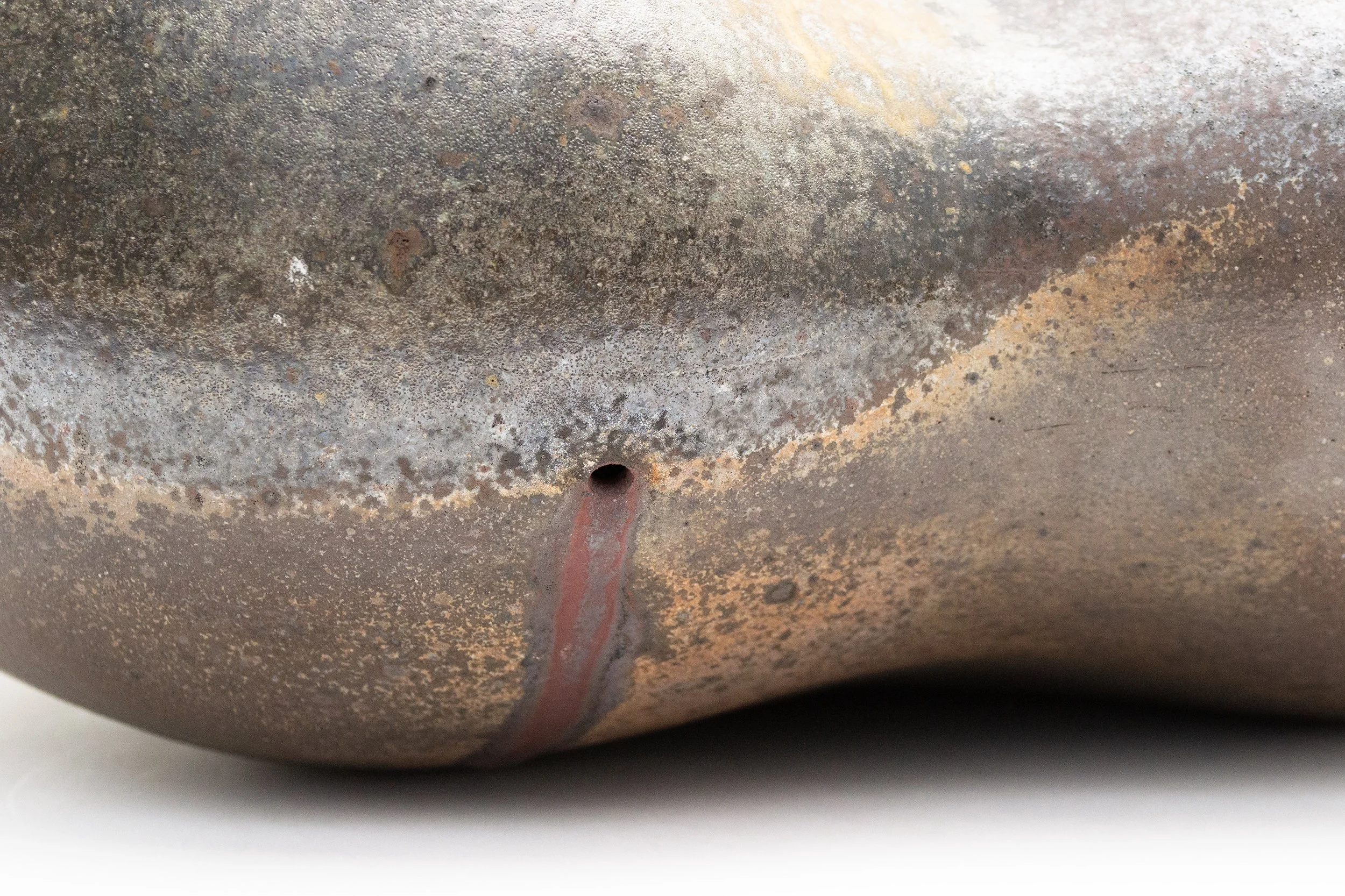
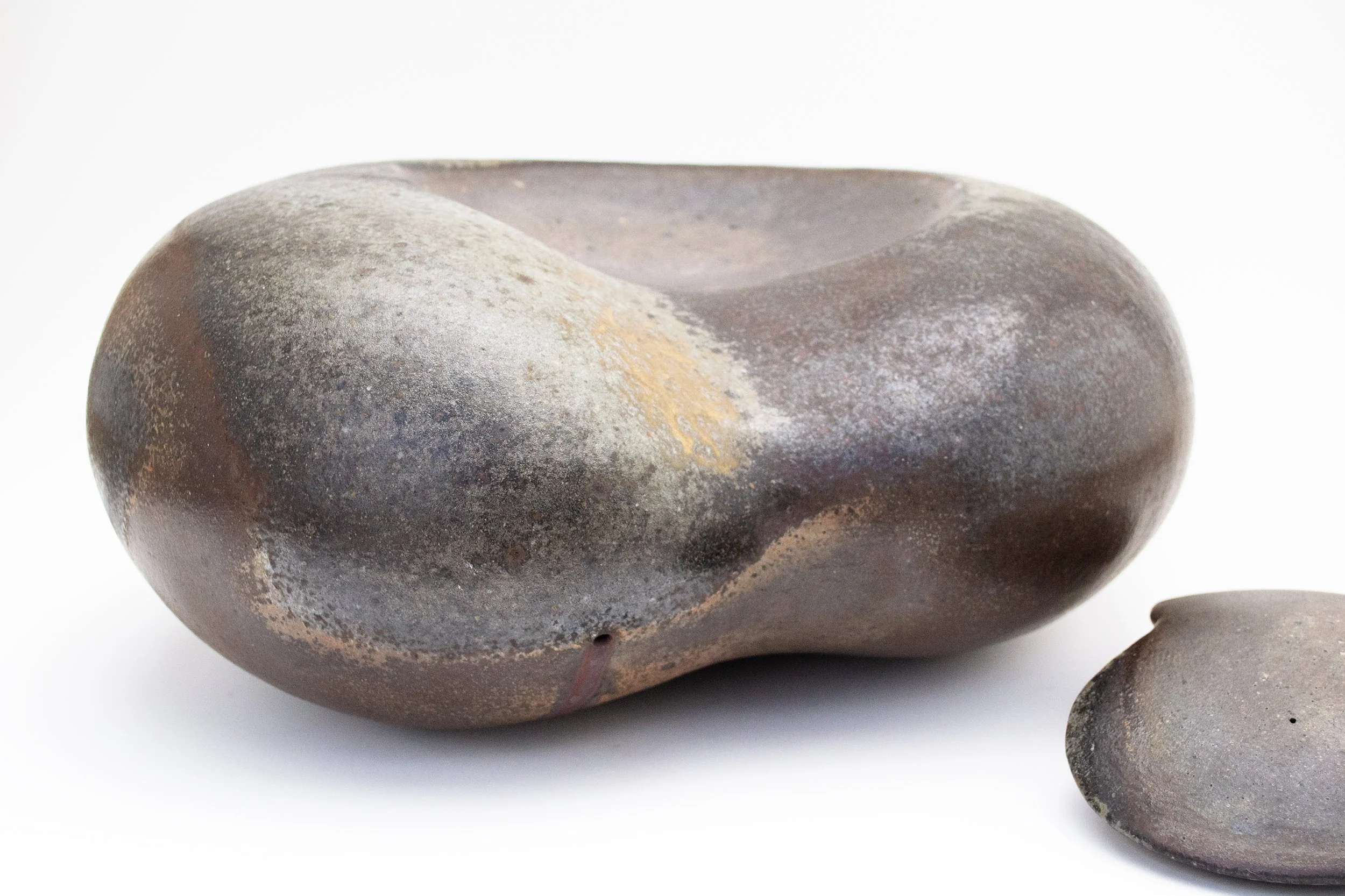
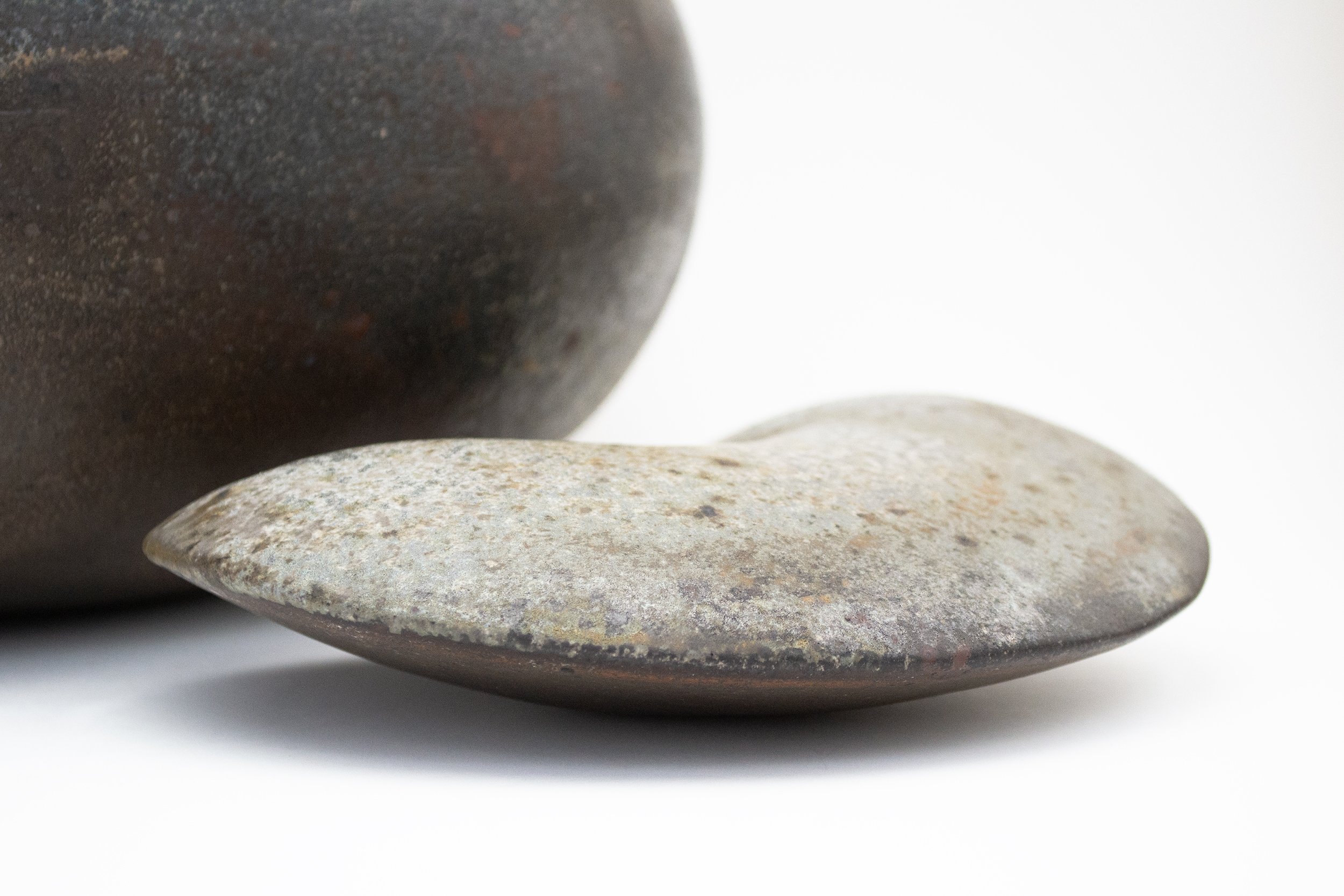
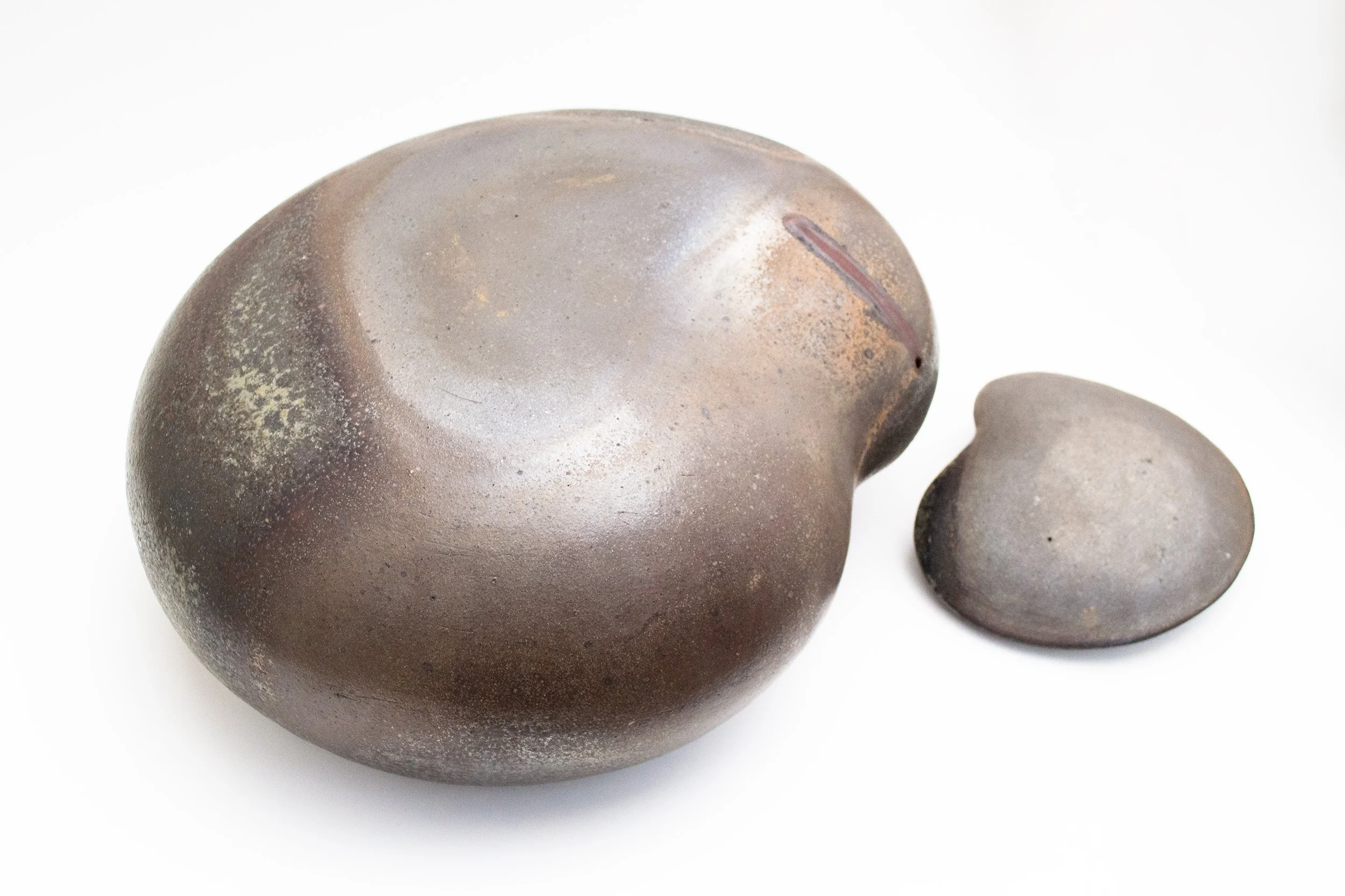
Coil-built stoneware with wild clay inclusions from Abiquiu, NM. Fired for 5 days in Logan Wannamaker’s anagama wood kiln in Taos, NM.
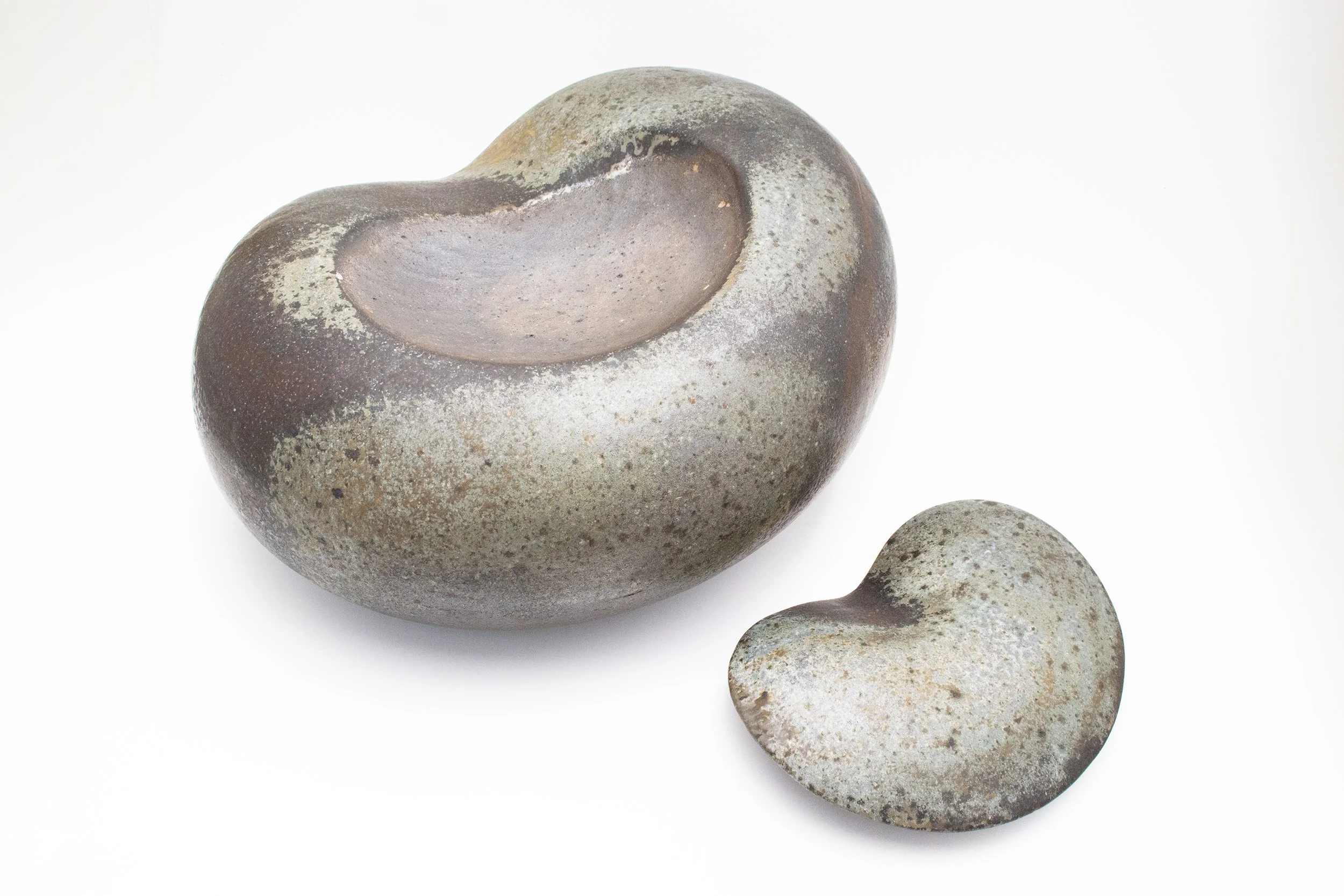
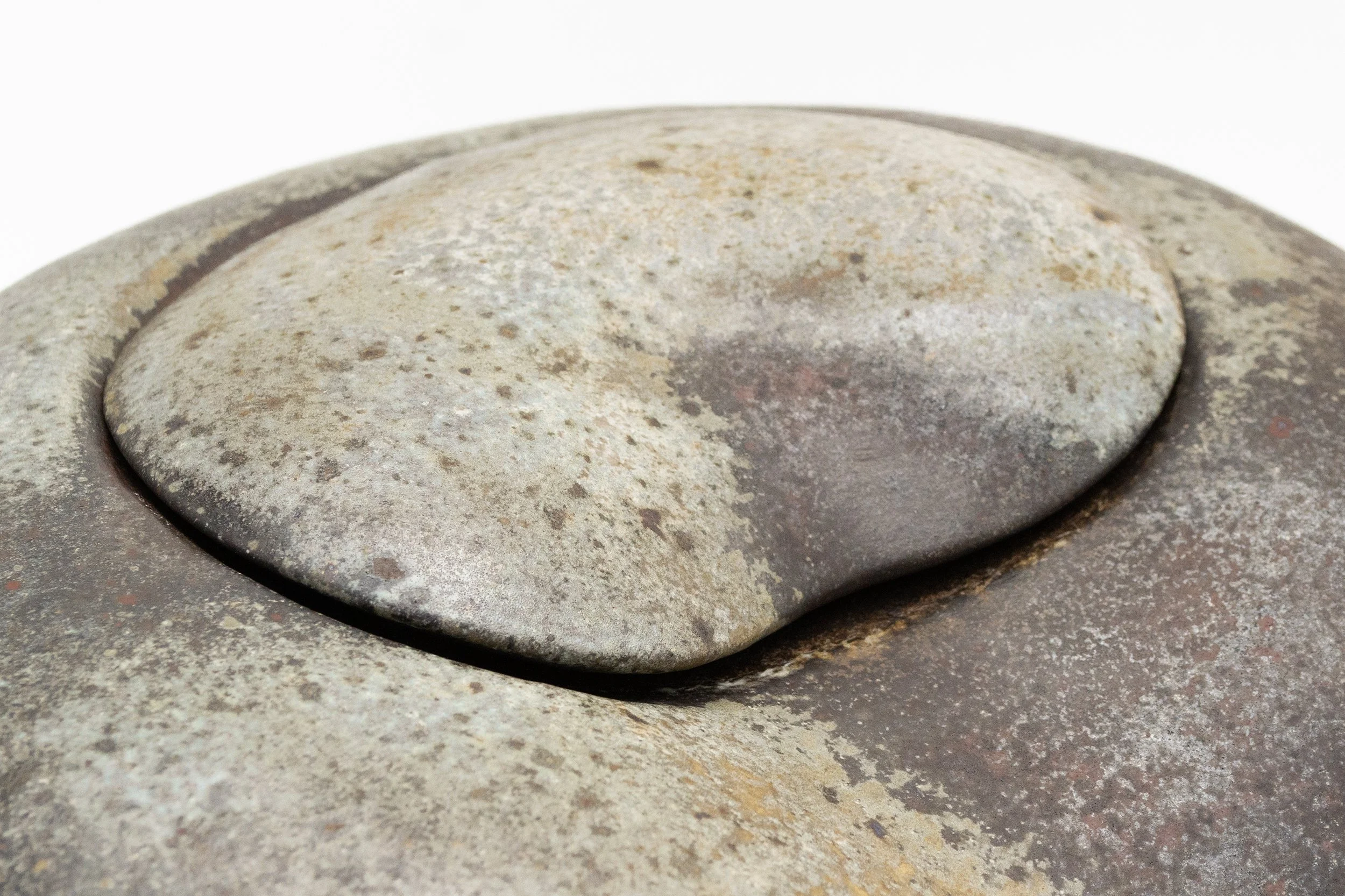
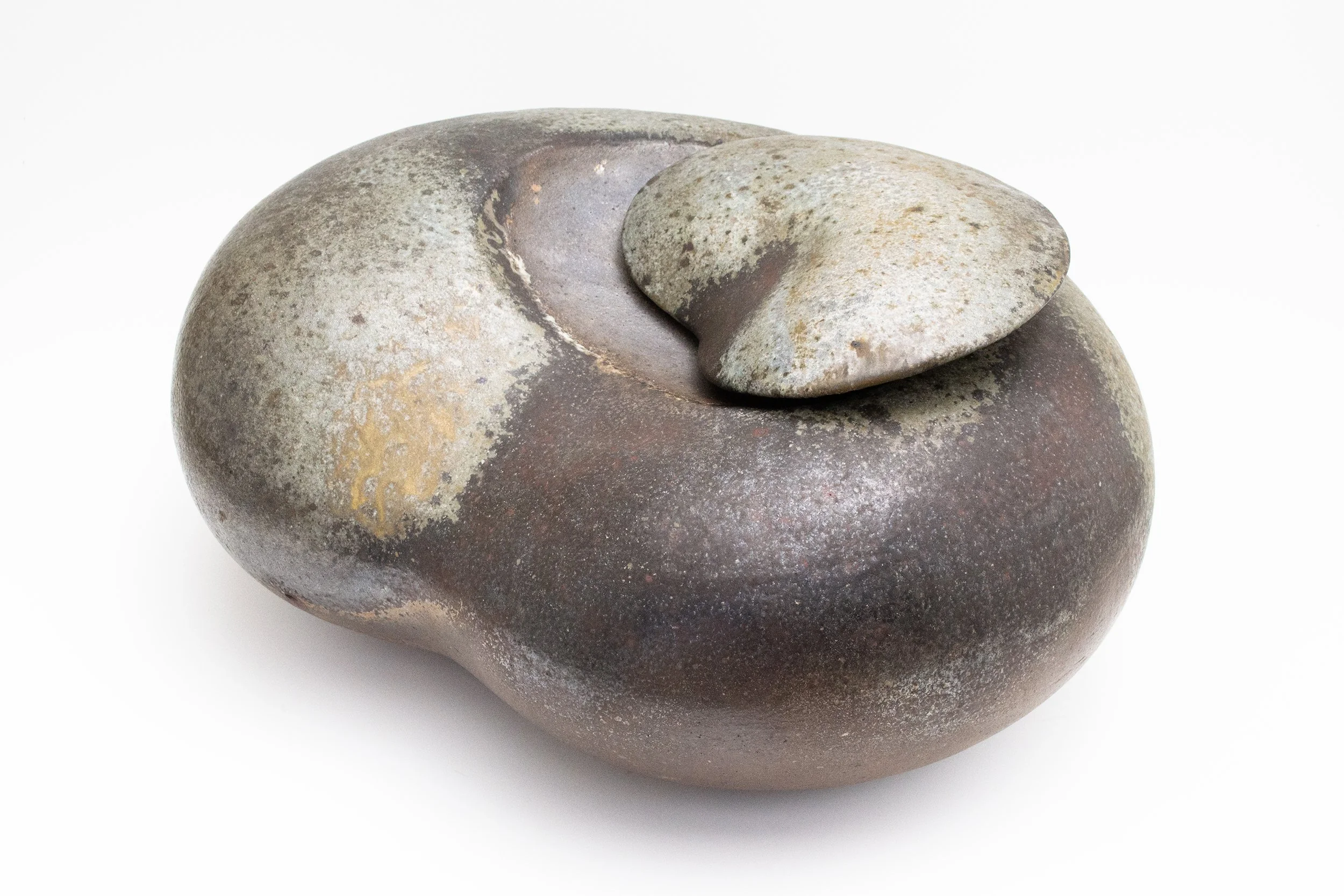
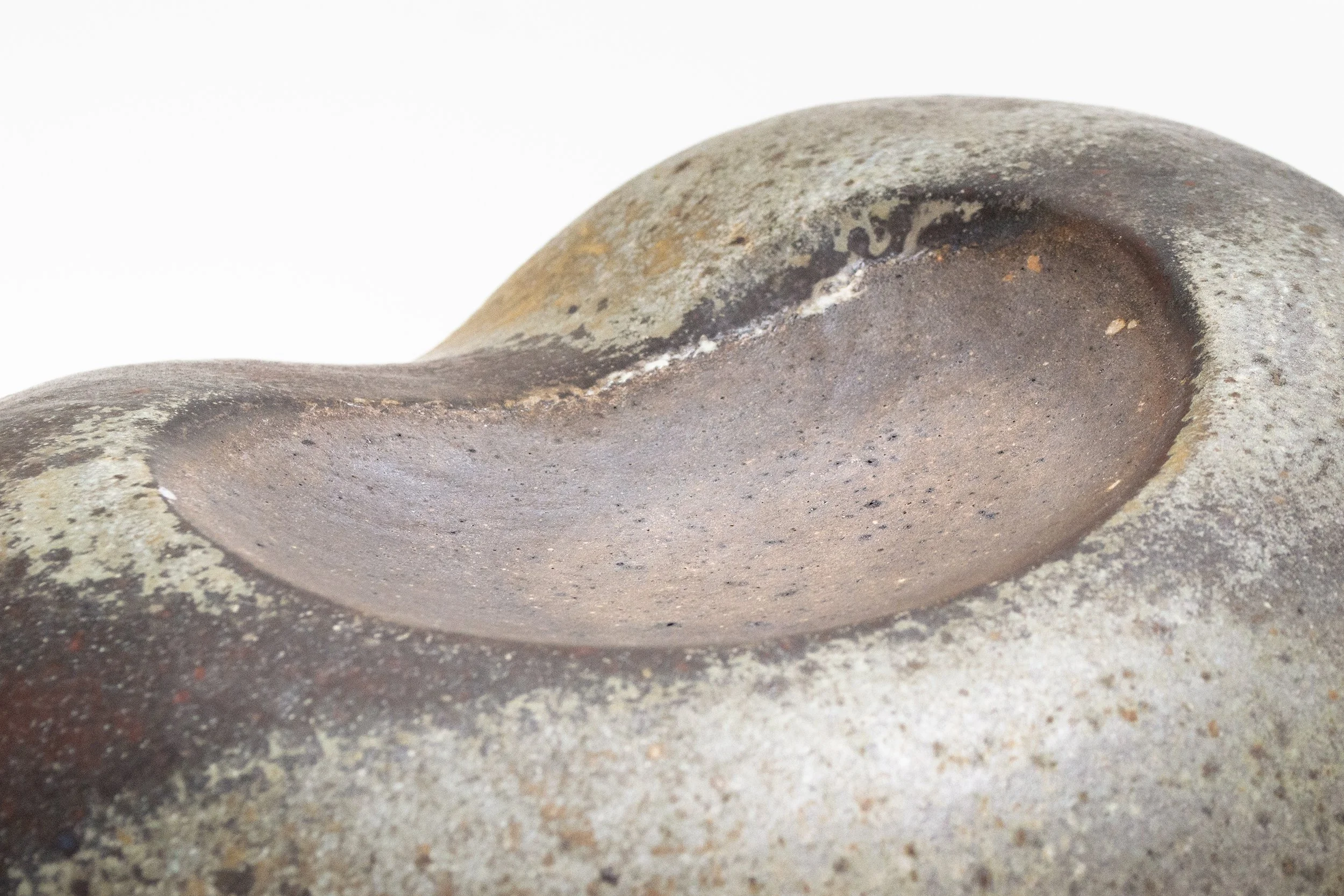
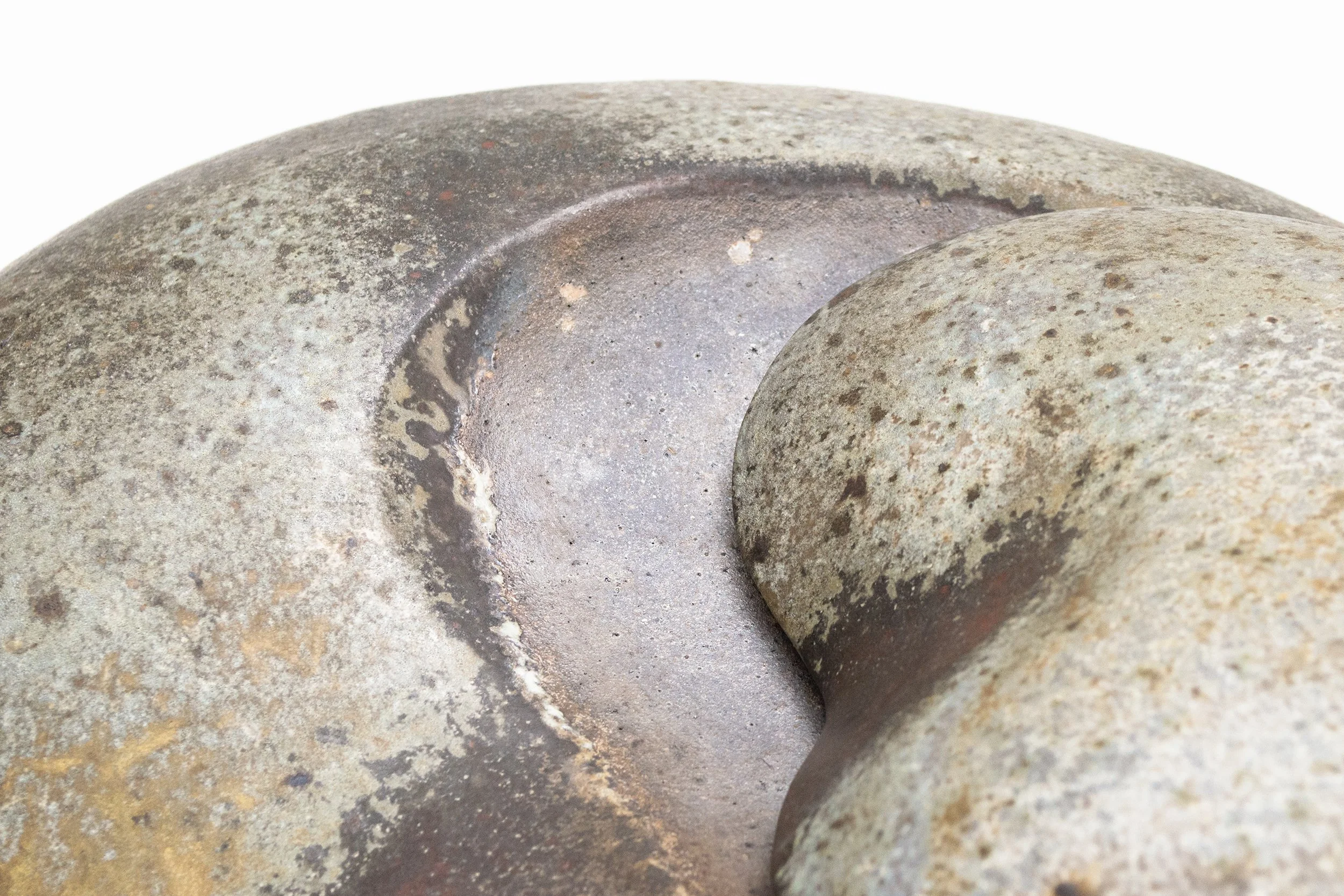
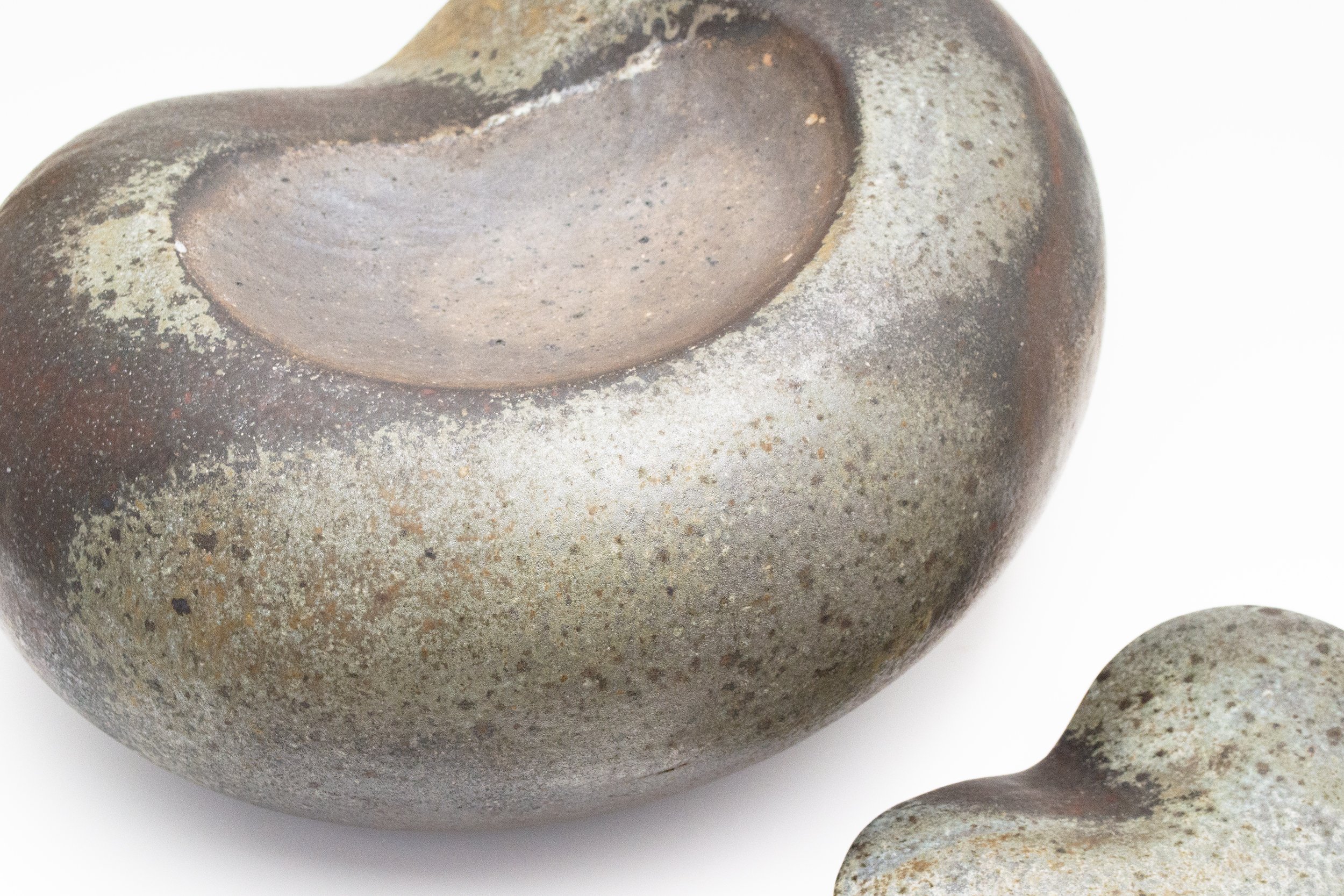
The two pieces come apart to showcase the liminal space that existed between them in the firing process. When pieces get fired together in a wood kiln, the flame must try to find a path through and around the forms.
Refractory materials can be used to resist the flame and the deposit of ash in these areas. One such material is rice hulls. A 1/2” layer of rice hulls was laid out in the indent of the bottom piece, with the top piece resting softly in the bed of rice hulls.
After the firing, we can see the raw clay surface which was covered by the rice hulls, which looks noticeably different in color and texture than the surrounding surfaces that are covered in ash glaze from being exposed to the kiln’s atmosphere.
The resulting marking speaks to the permanent marks and imprints we leave on one another as we cross paths in life. We go through experiences and the people around us inevitable leave their mark on us, and ours on them, as we move forward in life.